 |
|
Dear Maynard Family,
I am excited to welcome you to the first edition of our new Development Newsletter.
I want this newsletter to be informative, useful and easy to read. You can expect brief updates about what your support is helping make possible, ways to stay connected and opportunities to support our work.
As we look ahead to the Maynard Institute’s 50th anniversary in 2027, there is a lot to be excited about. In the coming months, we will share more about the Maynard Collective, a new giving community for supporters who want to deepen their connection to the Institute and help sustain our work.
I'll also share helpful information about ways to give, including donor advised funds, recurring gifts, matching gifts and other options that may make supporting Maynard easier and more meaningful.
Most importantly, I want this newsletter to be a conversation. If you have questions, ideas, want to learn more about supporting the Maynard Institute or have suggestions for what you would like to see in future newsletters, I would love to hear from you. Please reach out to me at: nadia@mije.org. I am also happy to schedule a quick Zoom or phone call.
Thank you for being part of the Maynard Institute community. I look forward to staying connected with you.
With gratitude,
Nadia Campbell-Mitchell
Director of Development
The Maynard Institute for Journalism Education |
|
|
|
 |
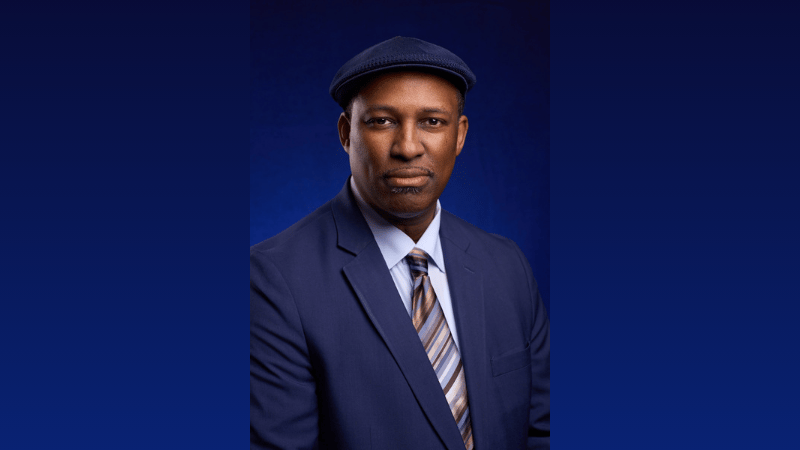
From fellowship to the field: How William J. Ford carries Maynard’s lessons forward |
|
 |
|
Four years after William J. Ford completed the Maynard 200 Fellowship, the investment is still at work. A reporting technique he learned through Maynard remains part of his approach at Maryland Matters, where he covers state government and politics. The fellowship also prompted him to think more intentionally about representation in political reporting, work he now carries forward through the National Association of Black Journalists Political Journalism Task Force.
The relationships have lasted, too. Ford remains connected to members of his Maynard cohort as they report, lead and navigate changes across the journalism field.
“I’ve gained an extended family through Maynard,” Ford said.
Ford’s story shows how investing in one journalist can ripple outward: strengthening the reporting communities rely on, opening doors for other journalists and building professional networks that sustain the field.
“For all the donors, thank you for supporting the Maynard Institute,” Ford said. “The programs offered teach people about the profession, which in turn can be used in a newsroom. That's power right there.” |
|
| Read William's story |
|
|
Maynard’s Propel Initiative: From stronger journalists to better-informed communities |
|
 |
|
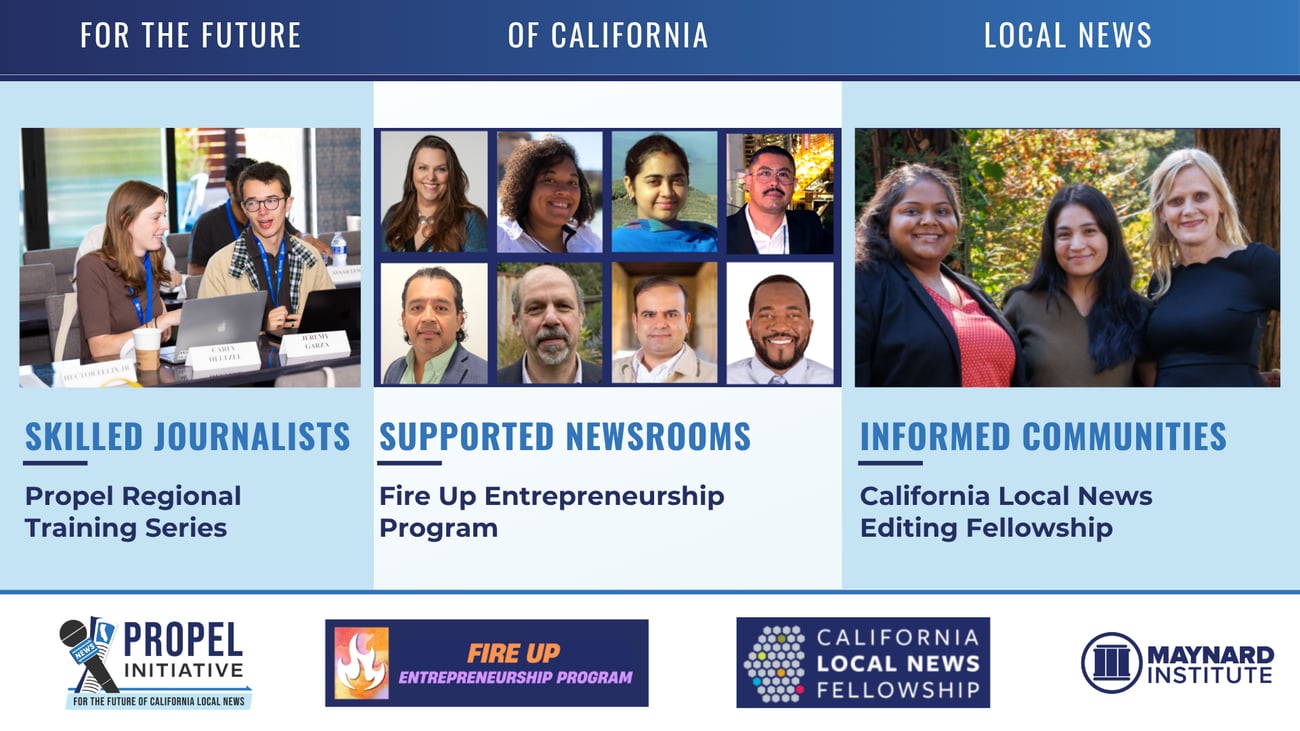
As California’s local news industry struggles with shrinking newsrooms and communities losing access to sustained local coverage, Maynard’s Propel Initiative is investing in the people and organizations working to fill those gaps. Through training, mentorship, grants and organizational support, Propel aims to strengthen California’s multi-lingual media ecosystem, ensuring long-term sustainability of local public service journalism for underserved localities.
That work is advancing through three programs:
-
Propel Regional Training Series: Nearly 50 journalists attended the first tuition-free training, building skills in storytelling, investigative reporting, ethical AI and more. Jeremy Garza said a Maynard Fault Lines® exercise changed how he approaches coverage: “Where do more people need to be heard? … This perspective will now shape my coverage.” The next training, Oct. 22–24 in Burbank, will focus on editing, leadership and newsroom management.
-
Fire Up Entrepreneurship Program: Eight California-serving newsrooms are receiving seven months of training and mentorship in revenue, audience, product and community, plus a $20,000 grant. Projects range from expanding free bilingual news to surfacing untold Black stories and addressing AI threats to audience traffic.
-
California Local News Fellowship Editing Program: Maynard is helping reporters and producers move into editing roles through intensive training and mentorship. Three journalists in the inaugural cohort are receiving yearlong support in editing, leadership and newsroom management to become stronger frontline editors.
Together, these programs strengthen journalists, newsroom leaders and local news organizations, ultimately helping communities access stronger, more representative local journalism.
|
|
|
 |
A smart way to give: Donor-advised funds
With DAF Day coming up Oct. 8, it’s a good time to consider whether a donor-advised fund could be part of how you give. A donor-advised fund (DAF) is a charitable account that lets you set aside money or other assets for giving, receive a tax deduction and choose which nonprofits to support over time.
Already have a DAF? Consider making a grant to Maynard this DAF Day. |
|
| Learn more |
|
|
Be part of what comes next
Your support helps Maynard equip journalists, strengthen newsroom leadership and build a stronger future for local journalism. Whether it’s your first gift or one of many, you can help extend this work into more newsrooms and communities.
Please note: We have made some important improvements to the donor experience. With our move to Fundraise Up and BlueLena, giving to Maynard is easier and more convenient. Donors now have access to a Donor Portal where they can view their giving history, update payment information, manage recurring gifts and access donation receipts.
|
|
| Support Maynard |
|
|
|


